
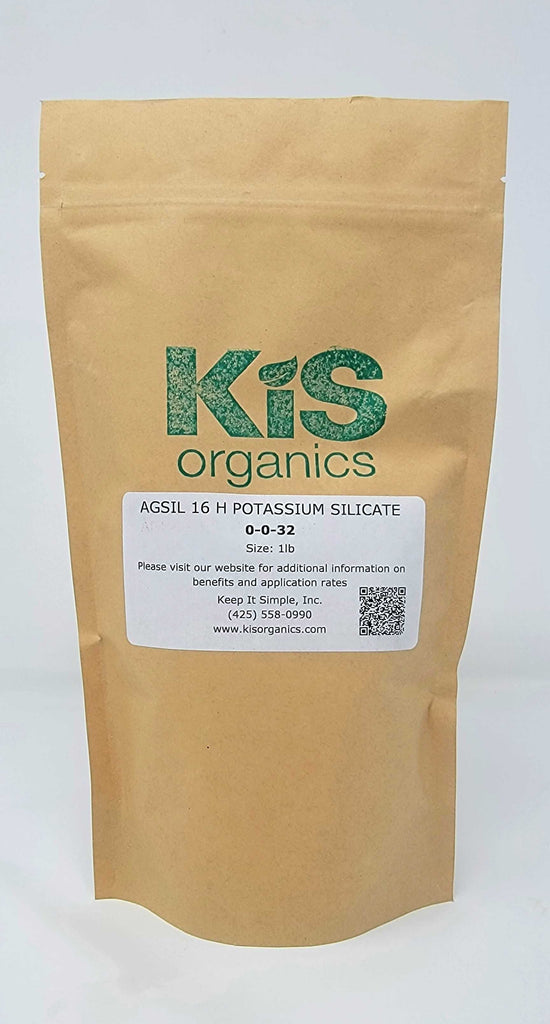
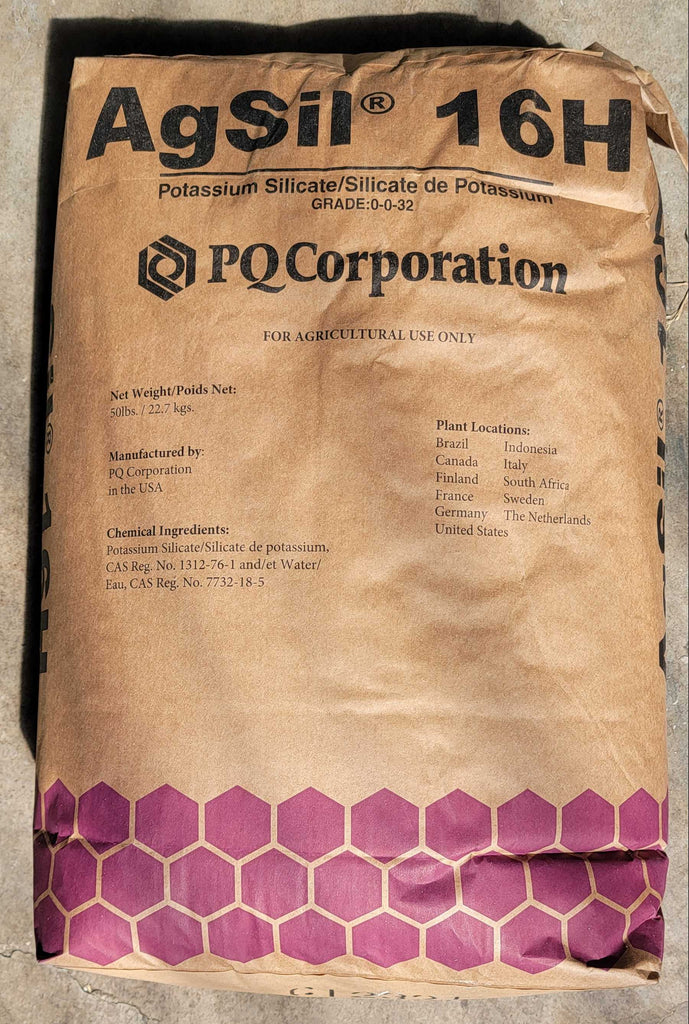
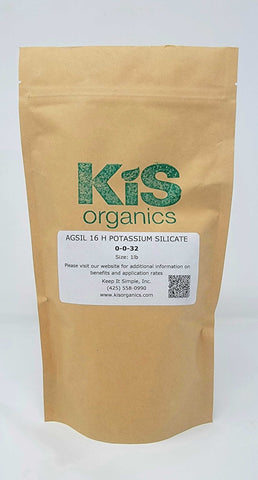
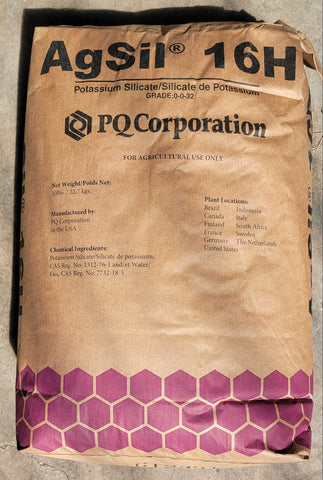
Agsil 16 H (Potassium Silicate)
0-0-32
Agsil 16 H is a soluble form of Potassium Silicate that will provide your plants with a 100% available source of silicon and potassium essential for optimum plant growth and health. Potassium Silicate will strengthen your plants internal processes during periods of excessive stress and external defenses against foliar and soil diseases. Benefits include stronger cell walls, increased stem strength, increased heat, drought and cold tolerances and longer lasting leaves and blooms!
Agsil 16H is a simple and inexpensive alternative to water-based Silica products – now you can make your own for pennies on the gallon. 560 grams of Agsil in 1 gallon will give you 7.6% silicon (SiO2).
Derived from: Potassium Silicate
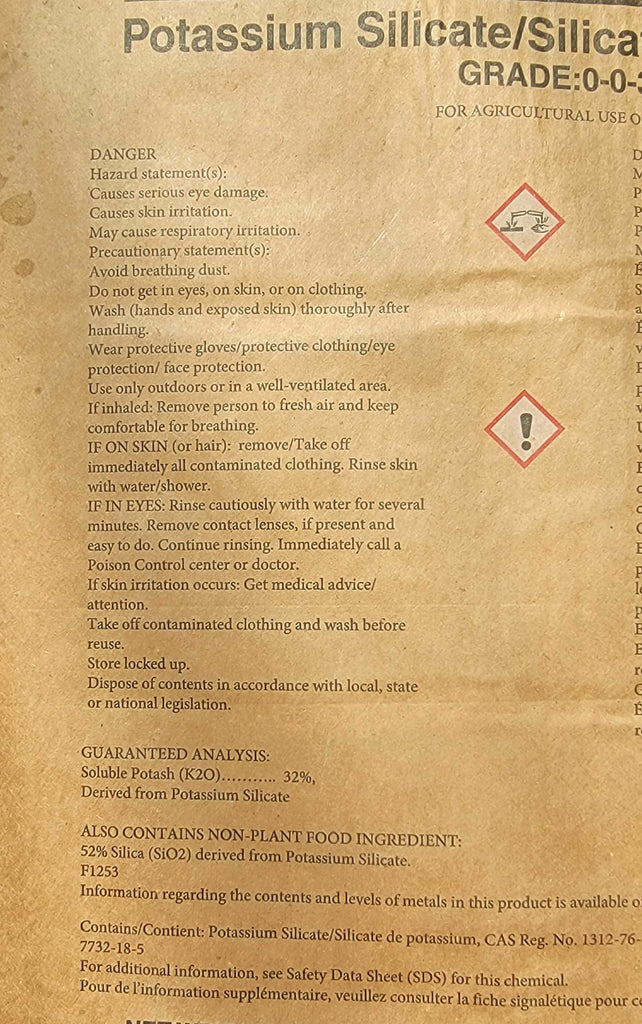
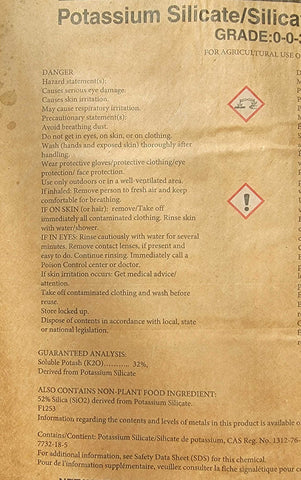
Guaranteed Analysis
Soluble Potash (K20): 32%
Silicon Dioxide (SiO2): 52%
SUGGESTED APPLICATIONS
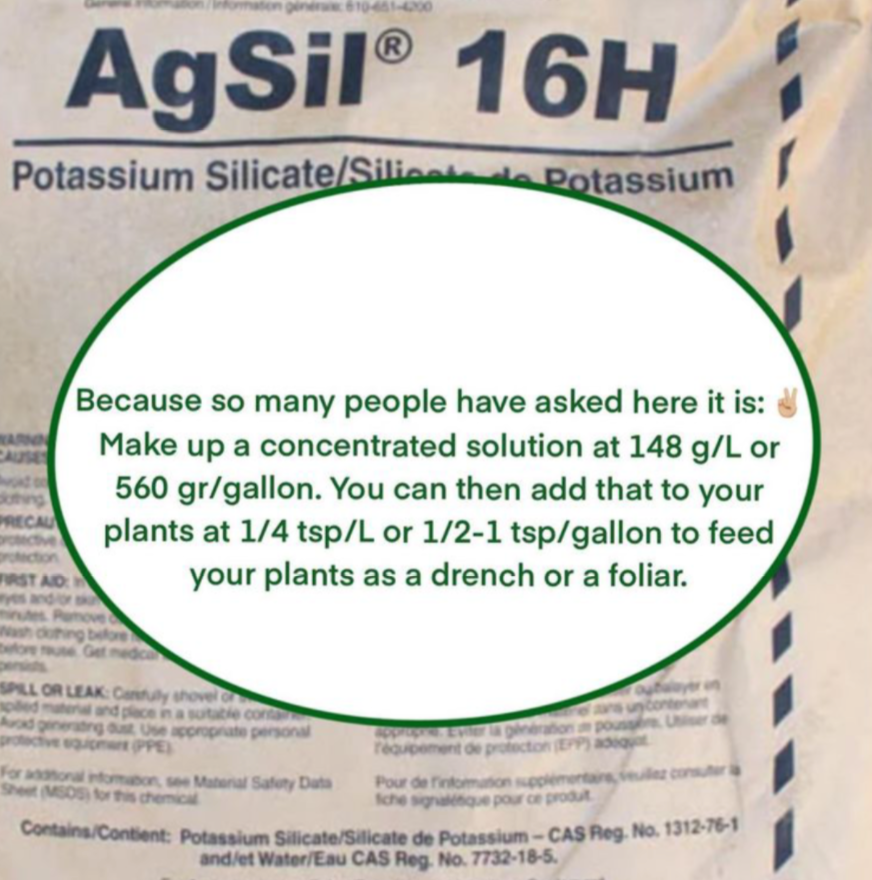
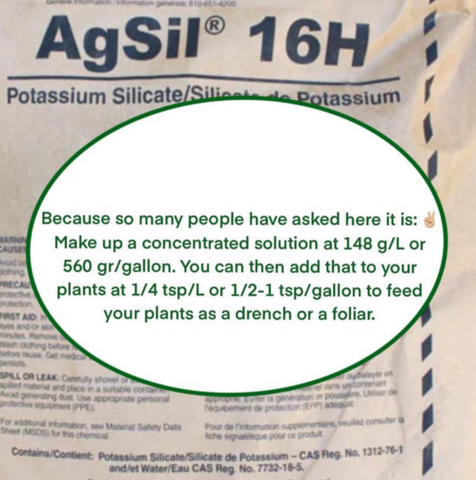
Make up a concentrated solution at 148 g/L or 560 gr/gallon. You can then add that to your plants at 1/4 tsp/L or 1/2 - 1 tsp/gallon to feed your plants as a soil drench or foliar spray.
Recipe for 7.8% Solution:
780: 1
148g : 1 L
560g : 1 gal
Mix 148 grams AgSil 16H into 1 liter water or 560 grams per gallon. Store in bottle or jar and shake well before use. (1 lb = 454 g). Use this 7.8% solution at 1/4 - 1/2 teaspoon per gallon water.
WARNING: Causes eye and skin irritation. Avoid contact with eyes, skin and clothing. Wash thoroughly after handling.
Never mix concentrated silica solutions with other concentrated fertilizers. It is best practice to make up the liquid solution first or add water prior to mixing the powder with other ingredients or nutrients.
When mixing, be sure to add water to the container first. Fill the container halfway with water and then add the Agsil before filling the rest of the way and then mixing thoroughly.
ADDITIONAL NOTES
Low pH (acidic water) is exactly what makes potassium silicate misbehave.
What low pH does to potassium silicate solubility
Potassium silicate in the bottle is a strongly alkaline “silicate” solution. When you dump it into low-pH water, the silicate species get protonated and start converting toward silicic acid. As the pH drops, silicic acid tends to polymerize(silica chains) and you can get:
- Cloudiness / gel / flakes (silica precipitation)
- More “reactivity” with Ca/Mg in hard water (forming insoluble silicates)
- A bigger chance of “snow” when you later add calcium sources
Rule of thumb: silicate stays happiest at high pH; the lower you push the mix, the more it wants to come out of solution.
Best way to dilute potassium silicate so you can raise pH without precip / lockout
1) Start with the right water
- Use RO / low hardness water if you can.
- If you must use hard tap water, expect more cloudiness risk and keep silicate dose modest.
2) Pre-dilute before it ever touches the reservoir
This is the #1 trick.
- Make a separate pre-dilution: add potassium silicate to water at 1:50 to 1:200 (silicate : water).
- Always add silicate into water, not water into silicate. (Better mixing, fewer hot spots.)
3) Add it to the tank first, with strong agitation
- Put your plain water in the tank, start circulation.
- Add the pre-diluted silicate slowly into the vortex.
- Let it mix 5–15 minutes before anything else.
4) Keep it away from calcium (the classic “snow” problem)
If you use any of these in the same mixing event, separate them:
- Cal-Mag, calcium nitrate (synthetic), calcium acetate, etc.
- In organics: very soluble Ca sources are less common, but some products still carry appreciable Ca.
Best practice: silicate first, mix well, then everything else.
If you’re doing foliar or small-batch: silicate in its own bottle is safest.
5) Don’t use silicate as your main “pH-up” lever
You can use it to bump pH, but try to keep it as a silicon supplement and do only gentle pH correction with it. Big pH swings with silicate = higher precipitation risk.
6) If you must bring pH back down after silicate, do it carefully
- After silicate is fully mixed, if you need to lower pH, use very small additions, let stabilize, re-check.
- Avoid crashing the final solution into the low 5s—that’s where silicate instability gets more likely.
Avoiding “lockout”
Most “lockout” complaints with silicate are really one of these:
- Precipitation (nutrients physically drop out = not available)
- Over-alkalizing the root zone temporarily (especially in soilless/hydro)
- Ca/Mg interactions (hard water + silicate)
So the lockout prevention is basically:
- Pre-dilute
- Add first
- Use soft water
- Don’t combine tightly with Ca
- Don’t chase big pH moves with silicate
STORAGE
The silica needs to be stored in a cool dry location. There is no real shelf life to speak of if kept dry or in liquid concentrate form. We suggest you make the liquid concentrate for storage because if the powder gets any moisture it can turn into a rock. Shake vigorously before using.
RESOURCES